
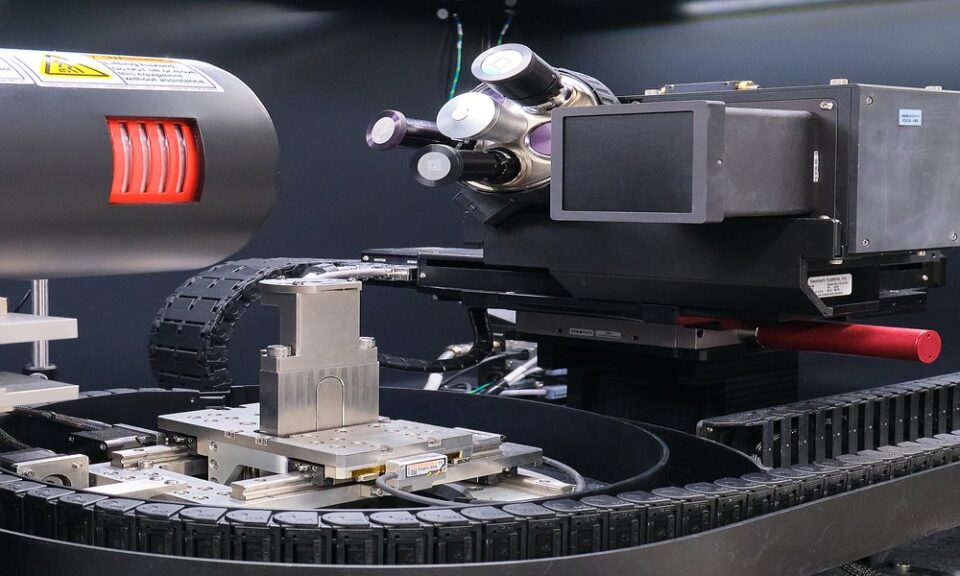
The application of the 3d micro computed tomography in quality assurance has become a necessity in the manufacturing industries. This is the advanced technology of imaging that captures the structures of the interior with great details without necessarily ruining components under inspection. This guide discusses the real-life industrial uses of micro CT that is being used to provide vital information. Knowing these applications will enable manufacturers to know where this technology will bring the greatest amount of value.
Discussing the industrial uses of 3D micro computed tomography
Additive manufacturing quality verification
Micro CT offers extensive examination of complex components created as a result of 3D printing. The technology exposes defects within the company that are not visible to the eye. The following are quality checking apps in the case of additive manufacturing:
- Powder entrapment detecting: Detection of particles that are not fused that are trapped in hollow structures and channels.
- Dimensional verification: Ensuring that components that are being printed are in agreement with their CAD models at all volumes.
- Lattice structure validation: Making sure that any temporary support features have been cleared out.
- Layer adhesion assessment: Test of the quality of bonding between consecutive layers that have been printed.
Electronics and semiconductor inspection
Reduction in the size of electronics results in inspection problems which can be solved uniquely only by micro CT. The technology offers non-destructive access to sealed devices and densely assembled devices. Electronics inspection application here are the applications:
- Solder joint examination: In-depth inspection of joints that are not visible on the external aspects of assemblies.
- Wire bond verification: Checking of acceptable connections in packaged semiconductor devices.
- Counterfeit component detection: This identification of internal structures that are part of genuine parts.
- Conformal coating analysis: Analysis of protective coatings that are applied to circuit boards.
Materials science and failure analysis
Information about the behavior and mechanics of failures of materials demand thorough internal analysis. Micro CT is used to view the inside characterizing the performance features. These are the research application materials:
- Porosity characterization: The characteristics of voids in terms of their size, shape, and distribution applied to materials are quantitative.
- Crack propagation studies: Visual effects of crack direction and crack growth behavior.
- Fiber orientation analysis: Correction of the reinforcing alignment in composite materials.
- Corrosion investigation: An assessment of material degradation and attack pattern.
Discussing the frequently asked questions
What is the resolution that micro CT can achieve?
Micro CT systems are able to give resolutions of sub-micron showing very fine internal structures.
Maximum size parts that can be scanned?
The size of parts depends on the capacity of systems; however, a number of industrial systems can deal with such small parts of a size of several millimeters.
What is the comparison of micro CT with the traditional X-ray?
Micro CT produces whole volumes of 3D as opposed to the traditional X-ray which produces only 2D projection images.
Is it scanning that is destructive?
No, micro CT is fully non-destructive and the parts that have been tested can be utilized afterward.
Finally
Critical quality assurance is used in various manufacturing fields with 3D micro computed tomography. The technology will give a distinctive knowledge of the internal structures that are inaccessible to other inspection methods. Micro CT enables the manufacturers to confidently measure the quality of their products or eliminate the chances of failure and minimize the development processes.
